Tesla's Massive Moss Landing Megapack Battery Storage Project: How's It Going Now?
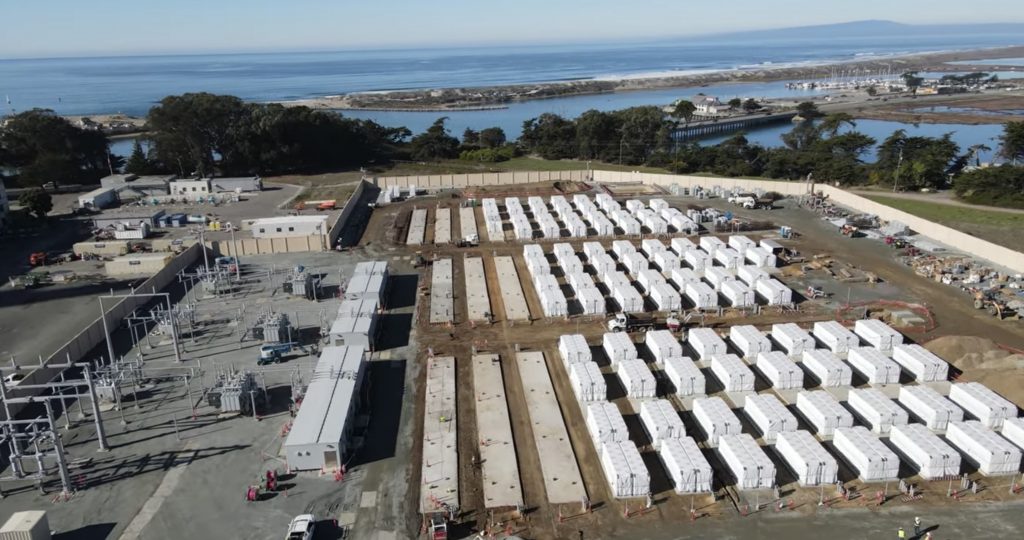
Tesla’s Megapack Farm in Moss Landing, California, has gone through a lot of travel since the project was approved by the California Public Utilities Commission in 2018. Consisting of 256 megapacks, the 182.5 MW/730 MW installation would be able to power an estimated 136,500. Home for several hours during periods of high demand. The system is also upgradeable, with Tesla’s contract with PG&E stipulating that the battery could be increased to 1.1 GW in the future.
Similar to Tesla’s other high-profile energy projects, the Moss Landing Megapack Farm, also known as the Elkhorn Battery Energy Storage Facility, will enhance grid reliability by addressing capacity shortfalls caused by increased local energy demand. It will also participate in the California Independent System Operator (CAISO) markets, providing both energy and ancillary services.
a quick background
It should be noted that the megapack-powered Elkhorn Battery Energy Storage Facility is one of only four battery projects that were proposed by Pacific Gas & Electric (PG&E). Of the four, three are owned and operated by third parties – only Tesla-powered Elkhorn batteries are owned and operated by PG&E. As explained by PG&E spokesman Paul Doherty, the utility has two underlying contracts with Tesla in relation to the facility – an engineering, procurement and construction (EPC) agreement to build the battery farm, and a long-term performance and maintenance agreement. Agreement (LTPMA) This requires the EV manufacturer to provide the system with regular maintenance for more than 20 years.
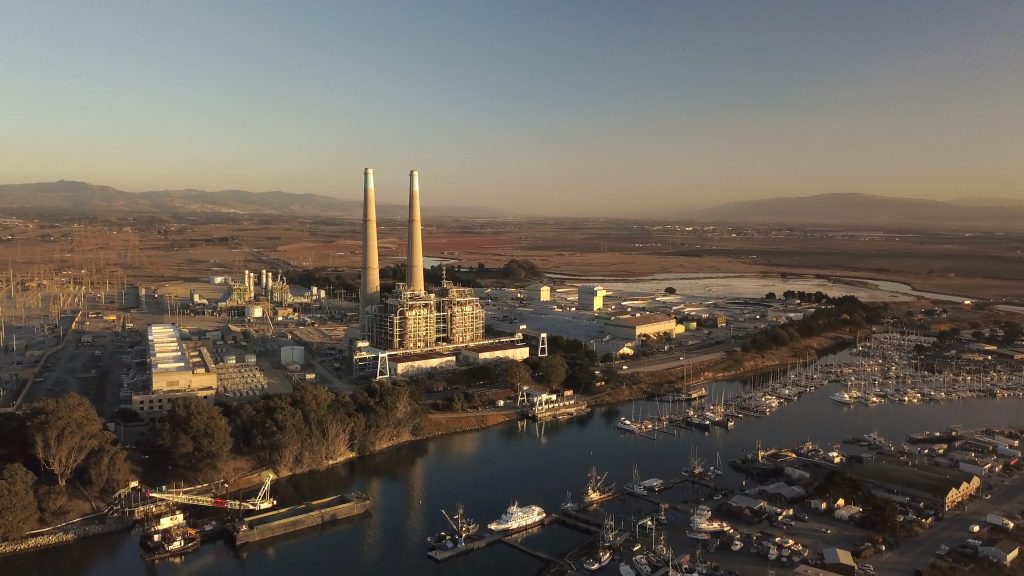
The Tesla-powered Elkhorn Battery is not the largest battery of the four systems proposed by PG&E. The honor goes to the Vistara Energy Storage Facility, which comprises 300 MW/1,200 MW Phase 1 and 100 MW/400 MW Phase 2 systems. Unlike the Tesla Megapack Farm, which was built on 4.5-acres of land at Moss Landing, the Vista Energy Storage Facility was previously built into a gas-fired power plant. Using over several thousand TR1300 battery racks supplied by LG Energy Solutions, Vistra’s large battery was a symbol of change in California’s energy sector.
However, things have not always been smooth sailing.
challenges over the years
Being a project associated with Tesla, it is no surprise that entities have emerged to oppose the Elkhorn battery project. After the Tesla-powered battery storage project was opened to public submissions about its potential environmental impacts, the California Unions for Reliable Energy took it upon themselves to halt the initiative. The union argued that Monterey County failed to meet California Environmental Quality Act standards because the county should have paid more attention to the potential for Tesla’s batteries to overheat and explode. The group also warned that Tesla batteries could potentially damage the purity of groundwater in the moss landing area.
These efforts proved futile, however, as by February 2020, the Monterey County Planning Commission decided to unanimously approve the Tesla Megapack-powered Elkhorn battery. Construction was scheduled for the end of March, and expectations were high that it would take about a year and a half to complete. However, another speed bump for the project came in the form of the Covid-19 pandemic, which delayed the progress of the project. Construction finally began in July 2020, and in early 2021, a drone flyover of the site showed the Megapack installation was proceeding smoothly.
PG&E spokesperson Doherty has informed Teslarati At the time of writing, all Tesla Megapacks have been installed successfully. The system is “currently undergoing final testing and certification, and is expected to be operational before the summer of 2022, pending the results of its final tests.” Granted, this represents a delay in the facility’s initial goals, but PG&E’s clear intent on being extra cautious is understandable.
An unexpected challenge to the batteries at Moss Landing came sometime last year, and while it didn’t involve the Tesla Megapack-powered Elkhorn battery, it resulted in energy storage projects being put under the microscope. In early September 2021, several battery modules from the Phase 1 area of the Vistara Energy Storage Facility overheated, triggering the facility’s sprinkler systems. Local firefighters were dispatched to the scene and Vistara decided to close the Phase 1 area until the investigation was completed. At this time, Vistara Battery’s 100 MW/400 MW Phase 2 had just been completed, so that part of the facility would remain operational.
Unfortunately, in February 2022 the Phase 2 area of the Wistra Battery became involved in another overheating incident. Similar to the September 2021 incident, the battery triggered a fire alarm in the Phase 2 area of the Vistara facility. The local fire department once again rushed to the facility, where they found about ten battery racks that had melted. The incident, which occurred within five months since the September 2021 issue, led to the halt of reactivation efforts for the Phase 1 area and the closure of Phase 2. This meant that the Vistra battery, at least until the investigation for both incidents is complete, is likely to remain offline.
PG&E’s Tesla Megapack Management System
What’s interesting about the Elkhorn Battery Energy Storage Facility is that it houses Tesla’s flagship battery storage units, while the MegaPack battery will not be managed by the electric vehicle maker’s software. Doherty confirmed, instead of Tesla’s Autobidder platform, PG&E has “opted to use Fluence’s AI-powered trading platform to provide optimization and market bidding services.”
Tesla’s Autobidder platform is operating successfully at Hornsdale Power Reserve (HPR) in South Australia, where it has effectively linked competition to drive down energy prices in the region. But since Autobidder is designed to work seamlessly with products like Megapack, the Fluence trading platform itself is very powerful and capable. Fluence’s Chief Digital Officer Syed Medini expressed optimism for the company’s AI-powered solution and its use in the Tesla-powered Elkhorn Battery Energy Storage Facility.
“PG&E was one of the first utilities to appreciate the need for a sophisticated AI-enabled bidding technology to optimize its energy storage assets. This technology-agnostic software provides PG&E with a single tool. which can optimize not only the Moss Landing project, but potentially the entire portfolio of production and storage resources to increase resource affordability. We CAISO improve efficiency and reliability of the market and for California consumers Excited to work with PG&E to use advanced technology for the lowest cost,” said Madney.
future expansion
While the Moss Landing Battery has faced its fair share of challenges, PG&E is extremely optimistic about energy storage overall. Based on the success of the Tesla Megapack-powered Elkhorn battery, the system could be expanded to an even further 1.1 GWh. All signs are pointing to this scenario, especially given the state’s intense focus on sustainability. Interestingly, Tesla’s Megapack itself sparked some controversy last year when a unit of Victoria Big Battery in Australia caught fire during testing. The incident eventually damaged two megapack units, and it raised much doubt about the potential dangers of battery storage technology.
If PG&E’s giant Tesla Megapack farm can prove as reliable as the now-iconic PowerPack-powered Hornsdale Power Reserve in South Australia, the project could potentially accelerate the adoption of battery storage systems in the near future. PG&E certainly appears confident about the potential of Battery Storage Solutions, as the utility moves forward with Vistara and plans to expand Vistara Battery even further.
Vistara spokesperson Meranda Kohn has said that the events of September 2021 and February 2022 will not put pressure on the companies to go ahead with the battery project. PG&E spokesperson Doherty was on the same page, telling Monterey County Weekly That they have “complete confidence” in the project and that an analysis of the events in September 2021 and February 222 showed that there was in fact no fault with the battery. A PG&E spokesperson further stated that the utility is committed to “advancing the field of fire safety in battery storage facilities,” which can be highlighted by the fact that it has been tasked with fire safety at the Tesla-operated Elkhorn Battery Energy Storage Facility. was awarded for the work. ,
Don’t hesitate to contact us with news tips. just send a message [email protected] to give us a head.

Comments
Post a Comment